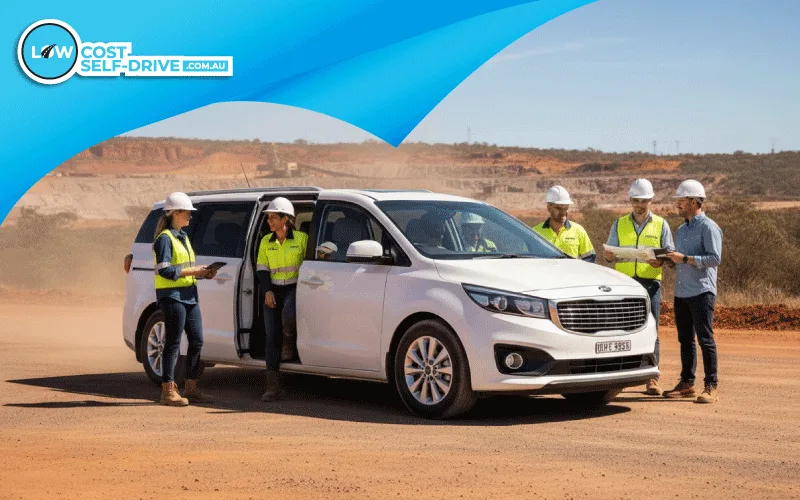
Across Australia’s mining, energy, and infrastructure sectors, one challenge never disappears: moving people efficiently across large, remote, and often unpredictable regions.
Whether it’s daily workforce transfers to the site, accommodation-to-mine shuttles, or temporary transport during construction and shutdown phases, transport decisions have a direct impact on operating costs, productivity, and compliance.
Increasingly, mining and infrastructure operators are choosing self-drive bus hire as a smarter alternative to traditional chauffeur-driven transport — particularly in regional and remote locations.
This article explains why self-drive bus hire works, how it reduces costs without compromising control, and why operators planning 2026 projects are turning to Low Cost Self Drive for flexible, compliant bus for rent solutions — without a driver provided.
Transport Reality in Mining & Infrastructure Projects
Mining and infrastructure projects operate under conditions that make standard transport models inefficient:
- Remote and regional site locations
- Fly-in fly-out (FIFO) or drive-in drive-out (DIDO) workforces
- Long project durations with fluctuating headcounts
- Strict site safety and access requirements
- Experienced in-house drivers already employed
In this environment, paying premium rates for chauffeur-driven buses often makes little commercial sense — especially when organisations already employ qualified drivers.
What Is Self-Drive Bus Hire?
Self-drive bus hire allows mining and infrastructure operators to rent buses or coaches without a driver included.
You provide:
- Your own licensed, site-inducted drivers
- Your own shift schedules and routing
The hire provider supplies:
- The bus or coach
- Maintenance and servicing
- Compliance-ready vehicles
- Flexible long-term hire terms
This model is particularly effective for regional site transfers, where consistency, cost control, and operational autonomy matter more than white-glove service.
The Cost Problem with Chauffeur-Driven Transport
Chauffeur-driven buses bundle multiple cost layers into one rate:
- Driver wages
- Penalty rates and overtime
- Accommodation and travel for drivers
- Fatigue management constraints
- Standby and idle-time costs
For long-term or daily transfers, these costs compound quickly.
By contrast, self-drive bus hire removes the most expensive variable — the driver — while allowing operators to leverage existing workforce capability.
Why Mining Companies Prefer “Bus for Rent” Without a Driver
In mining and infrastructure,
Key benefits include:
- Full integration with site rosters and shifts
- Drivers who already understand site rules
- Reduced handover and induction time
- Consistent safety culture across operations
- Fewer third-party dependencies
Most mining operators already employ staff with the correct licences and site approvals. Paying again for an external driver simply inflates costs without adding value.

Regional & Remote Locations: Where Self-Drive Works Best
Regional Australia presents unique transport challenges:
- Limited availability of professional drivers
- Long distances between accommodation and the site
- Variable shift start and finish times
- Harsh operating conditions
Self-drive bus hire solves these issues by placing vehicles directly under site control, eliminating reliance on external driver availability in remote areas.
Flexibility Across Project Phases
Mining and infrastructure projects are rarely static.
Typical transport needs evolve as follows:
🔹 Early Works & Mobilisation
- Smaller buses or mid-size coaches
- Irregular schedules
- Transport between camps and temporary sites
🔹 Peak Operations
- Daily, high-capacity workforce transfers
- Multiple shifts
- Fixed routes
🔹 Shutdowns or Demobilisation
- Reduced headcount
- Temporary transport surges
- Short-term redeployment
With self-drive bus hire, fleet size and vehicle types can be adjusted without purchasing or disposing of assets.
Financial Control: OpEx Beats CapEx for Site Transport
From a finance and procurement perspective, self-drive hire offers clear advantages:
- No capital expenditure on buses
- Predictable monthly operating costs
- No depreciation risk
- No resale or end-of-project disposal
- Easier cost allocation per project or site
According to Australian fleet management guidance, operational hire models are increasingly favoured for project-based transport due to cost volatility in ownership and resale markets.
Source: https://www.afma.org.au/
Safety, Compliance & Maintenance — Without the Admin Burden
Operating buses in mining environments requires strict compliance.
With a professional long-term hire:
- Vehicles are maintained to commercial standards
- Servicing schedules are managed
- Roadworthiness compliance is maintained
- Replacement vehicles can be arranged if required
Your team focuses on operations, not fleet admin.
Common Use Cases in Mining & Infrastructure
Self-drive bus hire is widely used for:
- FIFO and DIDO workforce transfers
- Camp-to-site shuttles
- Infrastructure construction crews
- Rail and road project teams
- Temporary shutdown of transport
- Regional energy and utilities projects
In each case, the value lies in cost efficiency combined with operational autonomy.
Why “Low-Cost” Matters — Without Cutting Corners
“Low-cost” in mining doesn’t mean low quality.
It means:
- Removing unnecessary cost layers
- Paying only for what you actually use
- Matching transport solutions to operational reality
Self-drive bus hire delivers commercial-grade vehicles without premium service add-ons that don’t add value in regional environments.
Why Mining Operators Choose Low-Cost Self-Drive
Low Cost Self Drive specialises in commercial and long-term vehicle hire, including buses and coaches suited to regional and industrial use.
What mining and infrastructure clients value:
- Access to buses for rent without drivers
- Long-term hire pricing (not inflated daily rates)
- Vehicles suitable for regional and remote conditions
- Flexible hire aligned to project duration
- National reach across Australia
This makes it easier to deploy transport solutions quickly — without locking into ownership or premium chauffeur contracts.
Planning Transport for 2026 Projects: Key Questions to Ask
Before committing to any transport model, consider:
- Do we already employ licensed, site-approved drivers?
- Are transfers daily, long-term, or project-based?
- Will headcount fluctuate during the project?
- Is capital better invested in core operations than vehicles?
- What happens to owned buses when the project ends?
If control, cost efficiency, and flexibility are priorities, self-drive bus hire is often the most commercially sound answer.
Final Thought: Control the Bus. Control the Cost.
For mining and infrastructure projects, transport isn’t about luxury — it’s about reliability, safety, and cost discipline.
Self-drive bus hire:
- Removes unnecessary driver costs
- Fits regional and remote operations
- Aligns with long-term project timelines
- Keeps transport under your control
If you’re planning workforce movements for a 2026 mining or infrastructure project, now is the time to rethink traditional transport models.
Explore Self-Drive Bus Hire for Regional Projects
Learn more about bus for rent solutions — without a driver — at:
https://lowcostselfdrive.com.au/
Built for regional Australia. Designed for projects. Priced for reality.